
Documents & practical guidance
What to do when someone dies at home
The first few hours, in order: who to call, whether the police need to know, how to keep the body, and which papers the cremation and the registration will ask for.
- Official procedure
- Read it in a few minutes
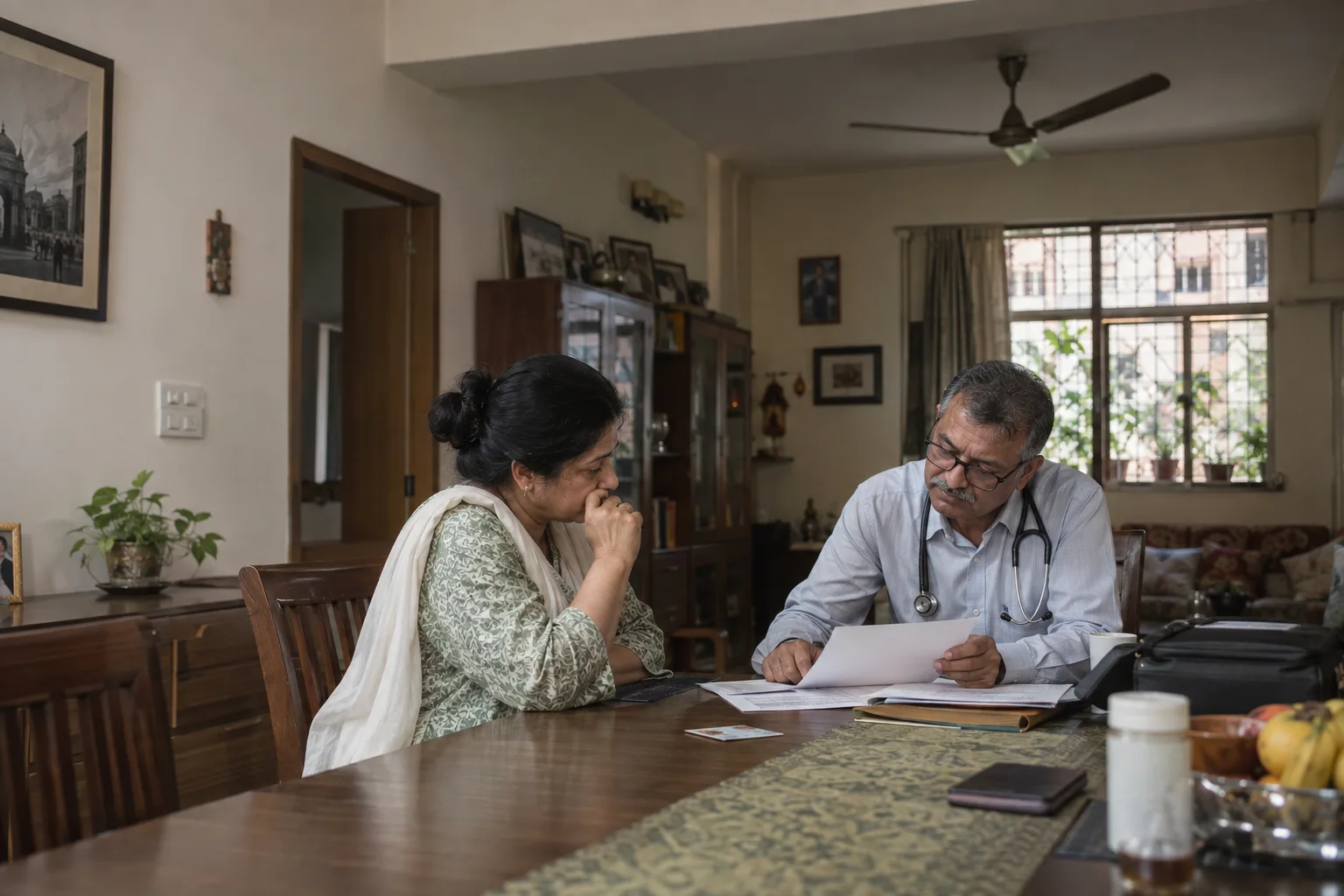
One less thing to work out alone.
The short answer
First, call the doctor who was treating the person, or dial 112 if nobody was. If the death was expected - old age or a known illness - the treating doctor issues the cause-of-death certificate (Form 4A) and the police are not involved. If it was sudden, violent or unexplained, call the police and do not move the body. Then keep the body cool, with a freezer box if the cremation is more than a few hours away, and register the death within 21 days.
The treating doctor; the police only for an unnatural or unexplained death; the MCD for registration
Doctor or police at once; register the death within 21 days
No fee for the certificate, the police or registration within 21 days
Start here
What to do,
in order.
Work down the list. Each step assumes only that the one above it is done.
-
Call the treating doctor - or 112
If the person was under a doctor's care, call that doctor first: they confirm the death and can certify the cause. If no doctor was treating them, or you are not sure the person has died, dial 112. A hospital that receives the body as 'brought dead' may record it as a medico-legal case, so tell them what happened plainly.
-
Decide whether the police need to know
An elderly or long-ill person who dies at home in a way nobody finds surprising is a natural death, and the police are not involved. Any accident, suicide, poisoning, burns, fall or death with no clear cause must be reported. Leave the body where it is until the police have seen it. The police procedure guide explains what follows.
-
Get the cause-of-death certificate (Form 4A)
For a natural death at home the treating doctor fills in Form 4A, the Medical Certificate of Cause of Death. Every later step depends on it: the cremation ground checks it at the counter and the registrar asks for it. Ask for the original and keep photocopies.
-
Keep the body cool
Close the eyes and mouth, lay the body flat, and keep the room as cool as possible. Without cooling a body should not wait more than a few hours, less in summer. If relatives are travelling or the cremation will be the next day, arrange a freezer box now.
-
Choose the ground and arrange the last rites
Decide on the cremation ground and the method - wood, CNG or electric - and arrange the hearse van, the pandit and the samagri. Carry Form 4A and photo ID of the deceased to the ground, and keep the cremation slip it gives you afterwards.
-
Register the death within 21 days
For a death at home the family registers it with the MCD zonal office covering the place of death, or with the NDMC or Delhi Cantonment Board inside their areas. It is free within 21 days. The death certificate that banks and insurers ask for comes from this registration.
Before you leave the house
What to take
with you.
Gather these once and you will not be sent home for them.
-
Form 4A from the treating doctor - the Medical Certificate of Cause of Death
-
Photo ID of the deceased, usually Aadhaar
-
Photo ID of the family member making the arrangements
-
The DD entry or FIR number and the police NOC, only if the police were involved
-
The cremation slip, kept for the registration
The first hour matters less than families fear
Nothing has to be decided in a rush except two things: whether a doctor can certify the death, and whether the police need to know. Everything else - the ground, the rites, the timing - can wait until the family has gathered, as long as the body is kept cool.
Nobody should charge you for the paperwork
The doctor's certificate, the police steps and registration within 21 days are all free. If anyone asks for money to "speed up" any of them, ask for a receipt first.
A little clarity
Common questions
If something here is still unclear, call us - someone answers at any hour.
Who should I call first when someone dies at home?
Do I have to call the police if someone dies at home in India?
What if no doctor was treating the person?
How long can the body be kept at home?
Can we take the body to the cremation ground ourselves?
Where to go next
Related reading.
The other steps families usually need around this one.
If you would rather not do this yourself
We handle the paperwork.
It is part of every arrangement we make - the registrations, the certificates and the queueing. Ask us what is involved in your case.